

How Manufacturing Companies Maximize Revenue From Selling Tungsten Carbide Scrap
Tungsten carbide scrap is one of the most valuable recyclable materials in manufacturing today. With China's January 2026 export controls cutting global tungsten supply, scrap prices have surged to levels not seen in decades. Clean carbide inserts now trade between $6 and $12 per pound, while premium lots can fetch $19 or more. For machine shops and manufacturing plants, the difference between casually tossing worn tooling into a general scrap bin and running a disciplined carbide recovery program can mean thousands of dollars each quarter. This guide explains exactly how to maximize that revenue.
Why Tungsten Carbide Scrap Is So Valuable Right Now
Tungsten carbide is a compound made from tungsten and carbon atoms, prized for its exceptional hardness and resistance to extreme temperatures. It ranks as the second-hardest industrial material after diamond. These properties make it indispensable in cutting tools, drill bits, mining equipment, and aerospace components.
The market has shifted dramatically. China controls over 80% of global tungsten production and activated strict export restrictions through its Catalogue of Dual-Use Items in January 2026. Ammonium paratungstate (APT) crossed $1,100 per metric tonne unit, and carbide powder hit 940 yuan per kilogram, a 200%+ increase since early 2024. Market analysts project sustained high pricing through 2026 and into 2027 because new mine supply remains years away.
Approximately 40% of new carbide production comes from reclaimed material, making recycled scrap a critical feedstock. That supply-demand squeeze means your worn inserts and end mills hold real monetary value.
Sort and Grade Your Scrap Properly
The single biggest lever for maximizing revenue is proper sorting. Mixed, contaminated material earns significantly less than clean, separated scrap.
Separate by Form
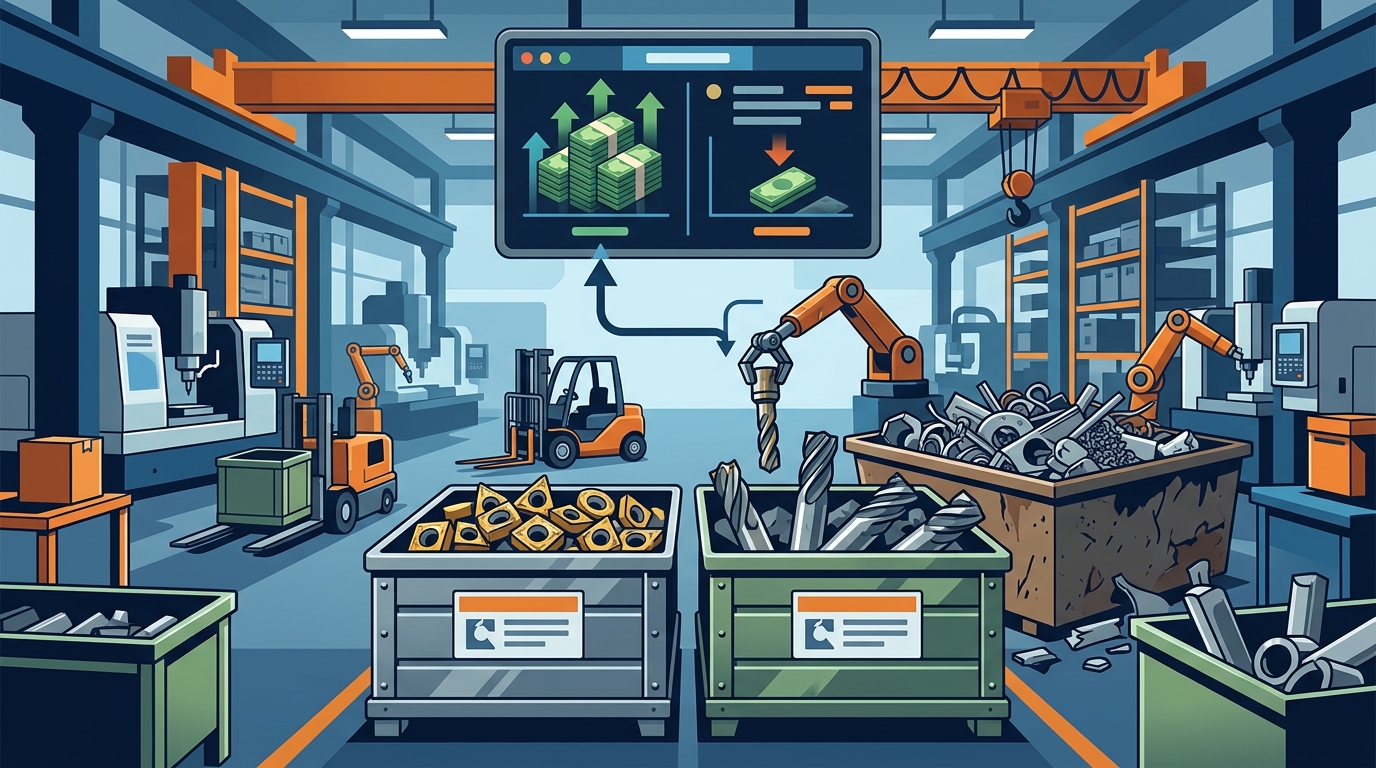
Solid inserts and clean granules are worth more than powders, swarf, or mixed metals. Keep end mills, inserts, and round tooling in dedicated collection bins. Sludge and grinding dust should go into separate sealed containers to prevent cross-contamination.
Remove Contaminants
All material should be clean, dry, and free of oil, coolant, steel attachments, and plastic. Steel-brazed tips should be separated from solid carbide pieces. Even small amounts of contamination can drop your per-pound offer by $2 to $4.
Know Your Tungsten Content
Carbide with 85% or higher tungsten content and minimal binder metals earns the best rates. If you are unsure about grade or purity, consider sending a sample for professional analysis before committing to a full shipment.
Key Factors That Determine Your Price Per Pound
Not all carbide scrap is equal. Understanding what drives pricing helps you negotiate confidently.
| Scrap Type | Typical Price Range (per lb) | Notes |
|---|---|---|
| Clean Solid Inserts | $8 - $12 | Highest demand; no brazing or steel |
| End Mills & Round Tooling | $14 - $19 | Premium for solid carbide |
| Carbide-Tipped Saw Tips | $1.50 - $5 | Lower tungsten content |
| Sludge & Powder | $0.15 - $2 | Requires extra processing |
| New/Unused Carbide | $24 - $29 | Top dollar for virgin material |
A five-gallon bucket of carbide inserts weighs roughly 80 to 100 pounds. At $8 to $11 per pound for clean material, that single bucket holds $640 to $1,100 in value. Many machine shops accumulate that volume in just a few weeks.
Choose a Specialized Carbide Buyer
A specialized carbide buyer is a recycler that focuses specifically on tungsten carbide and related refractory metals rather than general scrap. Selling to a specialist instead of a local general scrapyard almost always yields a higher per-pound price.
Look for buyers who offer transparent pricing tied to current market indices, immediate payment upon receipt and verification, and free containers, drums, and paid shipping. Carbide Kings in Charlotte, NC services the entire United States, provides collection containers, covers freight costs, and typically issues payment within 24 hours of receiving your material.
When evaluating any buyer, ask about their assay or verification process, minimum lot requirements, and whether they charge hidden processing fees.
Streamline Shipping and Logistics
Shipping costs and logistics headaches can eat into your return. The best carbide buyers eliminate this friction.
Small Shipments
For quantities under 40 pounds, USPS Priority Mail is a cost-effective option. Some buyers, including Carbide Kings, reimburse $11 in Priority Mail postage on qualifying shipments. Package materials securely to prevent loss during transit and consider adding package insurance.
Large and Palletized Loads
For palletized or high-volume shipments, work with a buyer that arranges truck pickup or freight delivery at no cost to you. This is especially important for manufacturing facilities generating hundreds of pounds monthly. Request a free quote from Carbide Kings to get a custom logistics plan for your operation.
Environmental and Sustainability Benefits
Recycling tungsten carbide is not just profitable. It is strategically important for sustainability. The zinc-reclamation process, one of the most efficient recycling methods, consumes only about 4 kWh/kg of energy compared to 12 kWh/kg for virgin production. Modern recycling achieves up to 95% material recovery, significantly reducing the need for primary mining.
Manufacturing companies that implement formal carbide recycling programs can track improvements against ESG metrics and corporate sustainability goals. Recycling reduces landfill waste, lowers carbon emissions, and helps stabilize the tungsten supply chain by decreasing dependence on geopolitically sensitive mining operations.
Key Takeaways
- Tungsten carbide scrap prices are at historic highs due to China's 2026 export controls on tungsten.
- Sorting scrap by form and removing contaminants is the most effective way to increase per-pound payouts.
- Clean solid inserts and end mills command $8 to $19 per pound; sludge and powder earn far less.
- A five-gallon bucket of clean inserts can hold $640 to $1,100 in value.
- Specialized carbide buyers like Carbide Kings pay more than general scrapyards and cover shipping costs.
- Payment within 24 hours of receipt is the industry benchmark for reputable buyers.
- Recycling carbide uses roughly 70% less energy than virgin production, supporting sustainability goals.
Frequently Asked Questions
What is tungsten carbide scrap worth per pound in 2026?
Prices vary by form and purity. As of mid-2026, clean solid inserts trade between $8 and $12 per pound, while premium end mills can fetch $14 to $19 per pound. Contaminated or mixed material earns significantly less.
How do I know if my scrap is real tungsten carbide?
Tungsten carbide is significantly denser than steel, typically non-magnetic, and produces short, reddish-orange sparks when ground. If a piece feels unusually heavy for its size, it is likely carbide. Professional XRF analysis can confirm composition.
Why do specialized carbide buyers pay more than local scrapyards?
Specialized buyers have direct relationships with reclamation facilities and pay based on actual tungsten content. General scrapyards often apply steep discounts because they must resell to middlemen, adding an extra margin layer.
Does Carbide Kings buy scrap from outside North Carolina?
Yes. Carbide Kings is based in Charlotte, NC, but services the entire United States. They provide containers, arrange freight pickup, and cover shipping costs for qualifying shipments.
What is the minimum amount of scrap I need to sell?
Most reputable carbide buyers, including Carbide Kings, accept shipments of virtually any size. Even a small box of worn inserts has value. For larger volumes, buyers typically offer better per-pound rates and complimentary logistics.
How quickly will I get paid for my carbide scrap?
Top buyers issue payment within 24 hours of receiving and verifying your material. Always confirm payment terms before shipping.
Why are tungsten carbide prices rising in 2026?
China activated strict export controls in January 2026 through its Catalogue of Dual-Use Items, restricting tungsten exports to a whitelist of approved companies. Since China produces over 80% of global tungsten, this has created supply shortages and pushed prices sharply higher.
Can recycled tungsten carbide match the quality of new material?
Yes. Advanced recycling processes recover tungsten at high purity, and manufacturers use reclaimed material to produce brand-new carbide products that meet original performance specifications.
Ready to Turn Your Carbide Scrap Into Cash?
Stop leaving money in the scrap bin. Get a free quote from Carbide Kings today. Fill out the online form or call the procurement team directly. They will quote your material, arrange shipping, and pay within 24 hours of receipt.