
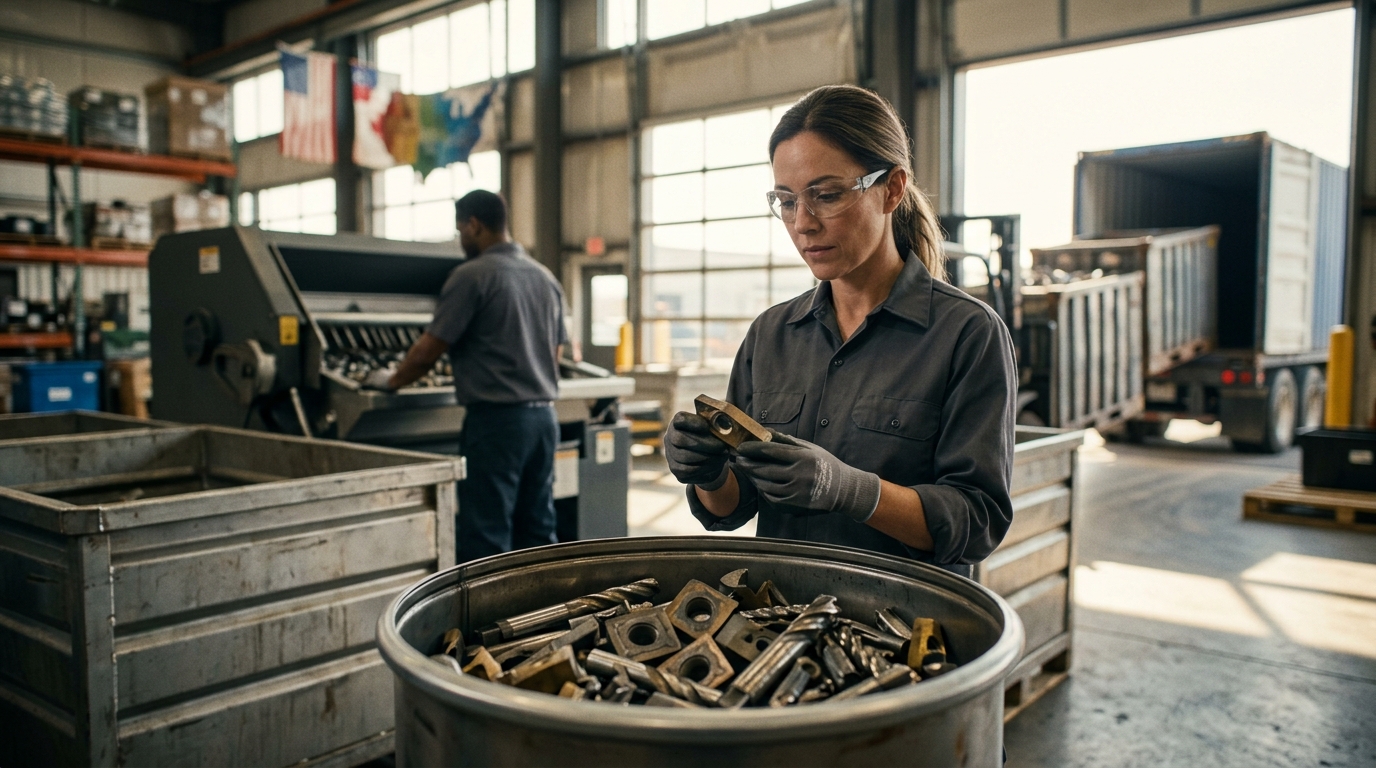
Industrial manufacturers and tooling shops frequently generate substantial volumes of spent cutting tools and worn inserts. Specialized tungsten carbide recycling currently captures approximately 85 percent of recoverable metal value from industrial waste streams. Local scrapyards typically offer generic pricing structures that ignore the unique metallurgical composition of hardmetal alloys. This pricing gap directly reduces operational margins for precision machining facilities. Understanding the available disposal pathways allows facility managers to optimize recovery rates and maintain strict environmental compliance.
Understanding the Tungsten Carbide Market
Tungsten carbide is a composite material consisting of tungsten and carbon bonded with a metallic binder. Global demand for hardmetal cutting tools continues to expand alongside advanced manufacturing sectors. The International Tungsten Industry Association reports that industrial consumption exceeds 1,200 metric tons annually. This sustained demand creates a robust secondary market for recovered scrap materials. Facility managers must evaluate pricing models before committing to disposal channels.
Local scrap yards often lack the analytical equipment required to grade hardmetal alloys accurately. They typically apply base metal pricing formulas to high-value carbide scrap. This mismatch results in significant revenue loss for industrial buyers. Specialized recycling programs address this gap by implementing precise chemical analysis protocols. These programs guarantee accurate grading and transparent pricing structures.
Engaging Specialized Tungsten Buyers
Specialized tungsten carbide buyers are entities that focus exclusively on hardmetal recovery and alloy processing. These companies maintain dedicated laboratory facilities for spectrometry and density testing. Carbide Kings Recycling Center operates as a trusted tungsten carbide scrap buyer and non-ferrous scrap recycler in the USA. Their Charlotte facility processes carbide drills, carbide inserts, and carbide bits at competitive market rates. You can explore their comprehensive service framework by visiting their about page.
Direct engagement with specialized buyers eliminates middlemen and reduces handling fees. These companies typically offer nationwide pickup services for volumes exceeding fifty pounds. The procurement process requires minimal administrative overhead. You can review their standard operating procedures through the selling guide. This streamlined approach maximizes net recovery value for your facility.
Direct Refining and Reclamation
Direct refining is the process of sending scrap materials to specialized metallurgical refineries. These facilities extract pure tungsten powder and cobalt binders for industrial reuse. The United States Geological Survey confirms that domestic recycling efforts reduce reliance on imported raw materials. This environmental benefit aligns with modern corporate sustainability mandates. Companies like Carbide Kings facilitate direct refinery partnerships to ensure maximum material recovery.
Refining contracts typically require strict purity thresholds and contamination controls. Facility managers must segregate carbide scrap from standard steel waste streams. Proper segregation prevents cross-contamination and preserves alloy integrity. The resulting refined powder meets aerospace and medical device manufacturing specifications. This closed-loop approach supports circular economy objectives across heavy industry.
Regional Recycling Initiatives
Regional recycling initiatives focus on localized collection networks and municipal compliance. The Environmental Protection Agency outlines specific handling requirements for heavy metal waste. These programs often provide subsidized collection events for small and medium enterprises. Participating in regional networks reduces transportation costs and carbon emissions. You can locate nearby collection points by visiting the nearby buyers page.
Municipal programs frequently partner with certified recyclers to manage industrial byproducts. These partnerships ensure that hazardous materials are processed according to federal guidelines. Facility managers should verify that regional programs maintain active hazardous waste permits. Proper documentation prevents regulatory penalties and ensures chain-of-custody compliance. Regional networks also provide educational resources for proper scrap segregation.
Logistics and Handling Protocols
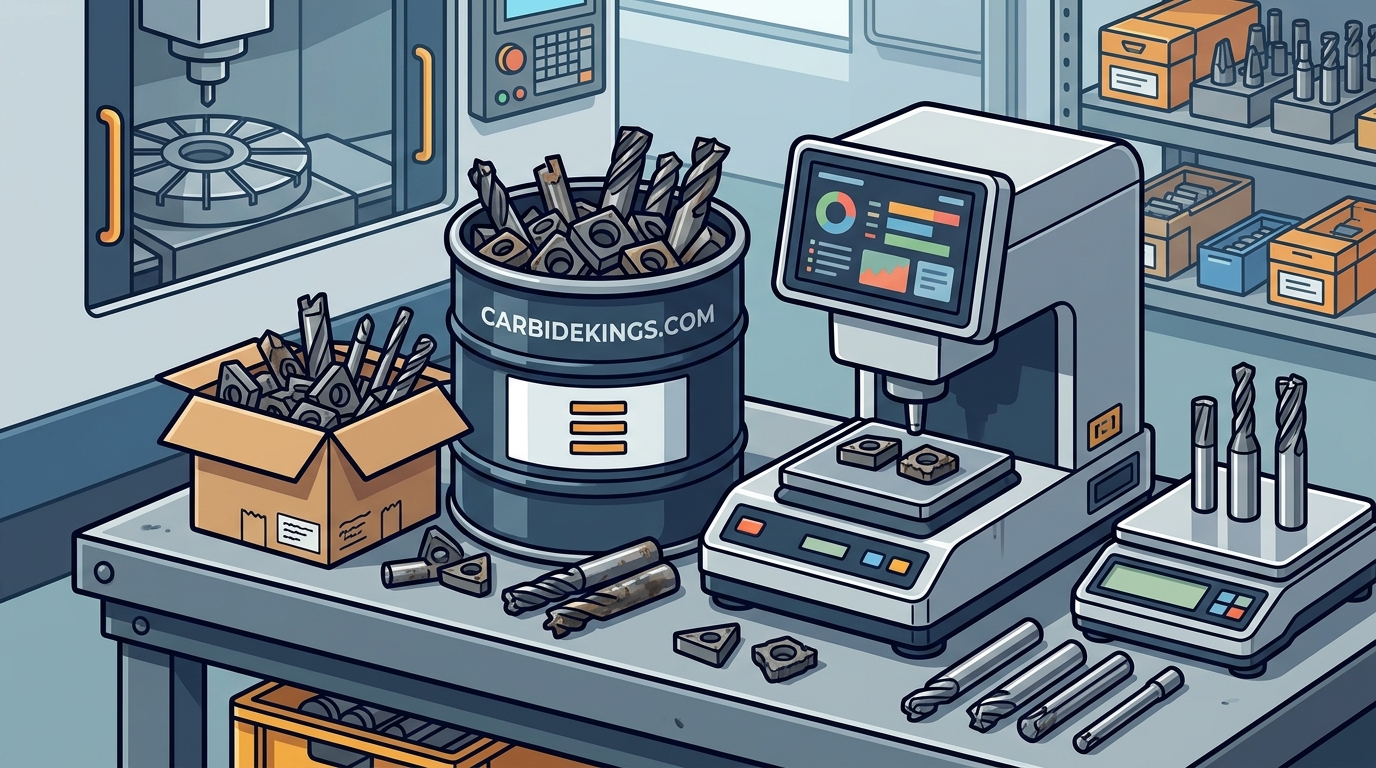
Effective logistics management requires standardized packaging and secure transportation methods. Tungsten carbide scrap must be stored in sealed containers to prevent oxidation. Certified recyclers provide specialized packaging kits for high-value alloy shipments. The frequently asked questions section outlines standard shipping requirements. These guidelines prevent material degradation during transit.
Transportation costs directly impact net recovery value for industrial facilities. Consolidating scrap volumes into larger shipments reduces per-unit freight expenses. Many specialized buyers offer scheduled pickup routes across major industrial corridors. This logistical advantage eliminates the need for facility managers to arrange independent freight. Proper documentation and manifest tracking ensure full regulatory compliance throughout the supply chain.
| Disposal Method | Typical Recovery Rate | Handling Complexity | Best Use Case |
|---|---|---|---|
| Local Scrapyards | Low | Minimal | Small volumes with mixed metals |
| Specialized Buyers | High | Moderate | Pure carbide scrap exceeding fifty pounds |
| Direct Refining | Maximum | High | Large-scale industrial waste streams |
| Regional Programs | Moderate | Low | Compliance-driven municipal partnerships |
Key Takeaways
- Specialized buyers consistently outperform local scrapyards in pricing accuracy.
- Direct refining recovers pure tungsten powder for aerospace applications.
- Regional programs provide subsidized collection for small enterprise compliance.
- Proper segregation prevents cross-contamination and preserves alloy value.
- Consolidated shipments reduce per-unit freight expenses significantly.
- Certified recyclers maintain active hazardous waste permits for safety.
- Nationwide pickup services eliminate administrative overhead for facility managers.
Frequently Asked Questions
What minimum volume qualifies for specialized buyer pickup?
Most specialized buyers require a minimum of fifty pounds to initiate a scheduled pickup. Smaller quantities can be consolidated with other facility waste streams to meet threshold requirements.
How do specialized buyers verify scrap purity?
Facilities utilize handheld spectrometers and density testing to verify alloy composition. This process ensures accurate grading and transparent pricing before payment issuance.
Are there environmental regulations governing tungsten carbide disposal?
Federal guidelines classify certain binders as heavy metal waste requiring certified handling. Certified recyclers maintain active permits to ensure chain-of-custody compliance.
Can mixed metal scrap be processed alongside pure carbide?
Cross-contamination reduces overall recovery value and complicates refining processes. Strict segregation protocols preserve alloy integrity and maximize net pricing.
How quickly do specialized buyers process payments?
Most certified programs issue payment within forty-eight hours of material weighing. Transparent pricing structures eliminate hidden deductions and administrative delays.
What documentation is required for interstate shipments?
Facility managers must provide hazardous waste manifests and chain-of-custody forms. These documents ensure full regulatory compliance throughout the transportation process.
Next Steps for Maximum Recovery
Optimizing your scrap disposal strategy requires partnering with certified industry leaders. Specialized buyers offer transparent pricing, nationwide logistics, and rapid payment cycles. Visit the Carbide Kings homepage to request a free quote. Schedule your next pickup today and maximize your operational margins.