

Industry data shows that tungsten carbide scrap commands premium pricing when processed through certified recycling channels. According to recent market reports, specialized buyers pay significantly higher rates for clean, sorted inventory compared to standard metal dealers. This financial advantage stems from the material exceptional hardness and industrial demand. Businesses that understand grading standards and transaction protocols consistently secure maximum returns. The following guide outlines the exact steps to optimize your scrap sale and avoid common valuation pitfalls.
Identify High-Value Material Categories
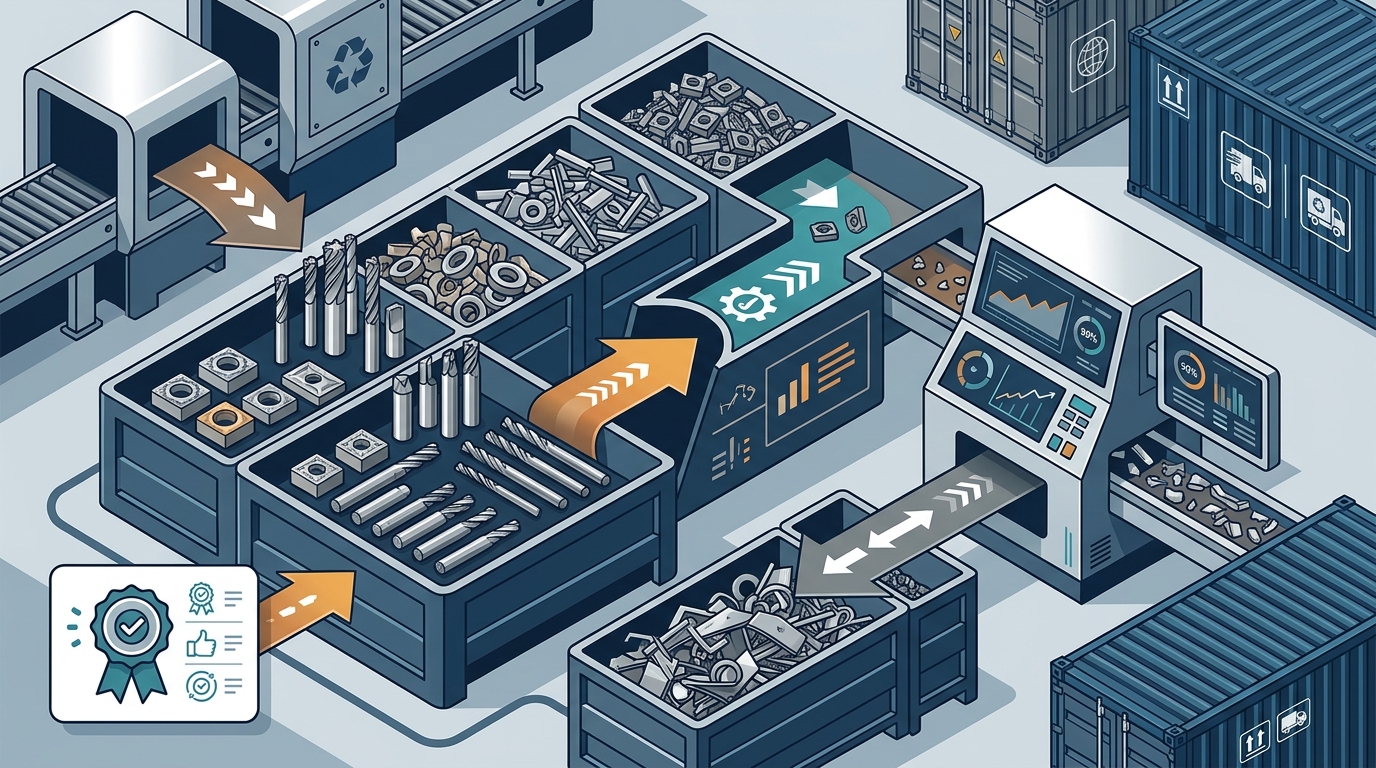
Tungsten carbide scrap encompasses several distinct industrial components. Each category carries a different market weight and processing cost. Graded tungsten carbide is a standardized classification system that assigns numerical values to material purity and density. Buyers prioritize specific forms because they require minimal reclamation effort. You should separate your inventory into distinct piles before contacting a dealer. Common high-value categories include solid carbide drills, indexable inserts, and worn milling cutters. Mixed or contaminated materials drastically reduce your final payout. Clean, uncoated scrap always commands the highest tier pricing. Separate brazed tools from solid blanks to prevent cross-contamination during weighing.
Prepare Inventory for Maximum Appraisal
Proper preparation directly impacts your final transaction value. Dealers inspect every shipment to verify material composition and remove non-carbide components. Indexable inserts are replaceable cutting edges mounted onto larger tool bodies. You must detach these inserts from steel shanks before shipping. Steel backing material adds unnecessary weight and lowers your overall grade. Use a standard wrench or specialized puller to remove the inserts safely. Store your separated carbide in labeled containers to streamline the intake process. Dealers appreciate organized shipments because they reduce handling time and inspection errors. Proper labeling also prevents accidental mixing with lower-grade scrap materials.
Evaluate Buyer Certification and Logistics
Not all scrap dealers operate with identical compliance standards. Certified recycling facilities follow strict environmental protocols and industry regulations. Tungsten carbide recycling is the regulated process of reclaiming tungsten and cobalt binders from used industrial tools. You should verify that your chosen buyer holds proper environmental permits and insurance coverage. Secure logistics prevent material loss during transit and ensure accurate delivery weights. Reputable companies provide detailed shipping guidelines and tracking documentation. Transparent communication prevents unexpected deductions or hidden handling fees. Always confirm whether the buyer offers free pickup services or requires drop-off arrangements.
Compare Pricing Models and Payment Terms
Transaction structures vary significantly across the recycling industry. Some dealers offer fixed weekly rates based on commodity market fluctuations. Others provide custom quotes tailored to your specific inventory volume. Commodity market fluctuations are daily price changes driven by global supply chain dynamics and manufacturing demand. You should request a written pricing schedule before shipping your materials. Fast payment terms typically range from twenty-four to forty-eight hours after delivery. Avoid buyers who delay compensation or require lengthy approval processes. Transparent pricing eliminates hidden deductions and protects your profit margins. Compare multiple quotes to ensure you receive competitive market rates.
Execute the Transaction Efficiently
Finalizing your scrap sale requires careful documentation and verification. You should photograph your inventory before packaging to establish a clear baseline. Keep all shipping receipts and weight tickets for your internal records. Dealers conduct independent testing to verify material composition upon arrival. Minor discrepancies between your initial count and final appraisal are normal. Reputable buyers provide detailed breakdowns of their testing results. You should address any disputes immediately to maintain a positive business relationship. Consistent transactions build long-term partnerships and unlock priority pricing tiers.
| Material Category | Preparation Requirement | Typical Market Tier | Recommended Buyer Path |
|---|---|---|---|
| Solid Carbide Drills | Remove steel shanks | Premium | Specialized Recycling Program |
| Indexable Inserts | Separate from tool bodies | High | Direct Dealer Submission |
| Brazed Cutting Tools | Grind down to pure carbide | Moderate | Bulk Processing Service |
| Mixed Industrial Scrap | Manual sorting required | Standard | General Scrap Evaluation |
Key Takeaways
- Separate indexable inserts from steel tool bodies to prevent weight penalties.
- Clean, uncoated solid carbide consistently achieves premium market pricing.
- Certified recycling facilities follow strict environmental protocols and industry regulations.
- Transparent pricing eliminates hidden deductions and protects your profit margins.
- Fast payment terms typically range from twenty-four to forty-eight hours after delivery.
- Consistent transactions build long-term partnerships and unlock priority pricing tiers.
- Document your inventory thoroughly to streamline the intake and appraisal process.
Frequently Asked Questions
How do dealers determine the exact grade of my carbide scrap?
Dealers use specialized spectrographic analysis to measure tungsten and cobalt percentages. This testing method provides precise composition data for accurate pricing. You should expect a detailed report alongside your final payment.
Is it cheaper to ship scrap myself or use dealer pickup?
Dealer pickup services typically eliminate shipping costs and reduce your handling expenses. You should verify whether the buyer covers freight charges for large volumes. Direct delivery often incurs additional fuel and packaging fees.
What happens if my scrap contains unexpected steel or aluminum components?
Non-carbide materials trigger automatic weight deductions during the inspection phase. You should manually remove all foreign metals before shipping your inventory. Clean separation prevents unnecessary penalties and maximizes your final payout.
How frequently do tungsten carbide market prices update?
Market prices typically adjust weekly based on global manufacturing demand and raw material availability. You should request current rate sheets before finalizing your transaction. Locked-in pricing protects your inventory from sudden market downturns.
Can I sell small quantities of carbide scrap to major buyers?
Most certified recycling centers accept shipments starting at fifty pounds. You should contact your preferred dealer to confirm minimum weight requirements. Small volume transactions still qualify for standard market pricing tiers.
What documentation do I need to complete a scrap sale?
You will need a valid government-issued identification and your company tax documentation. Dealers require accurate business information to process electronic payments. Keep your shipping receipts and weight tickets for your internal records.
How long does the entire appraisal process take?
Standard inspections typically require twenty-four to forty-eight hours after material delivery. You should expect immediate communication regarding your final valuation. Expedited processing is available for high-volume industrial partners.
Maximize Your Scrap Sale Today
Ready to convert your unused industrial tools into immediate revenue? Contact our certified recycling team to schedule a free consultation and receive a custom quote. Visit our main portal to explore our complete scrap acceptance guidelines and shipping instructions. Start your transaction now and secure the highest possible return on your tungsten carbide inventory.