
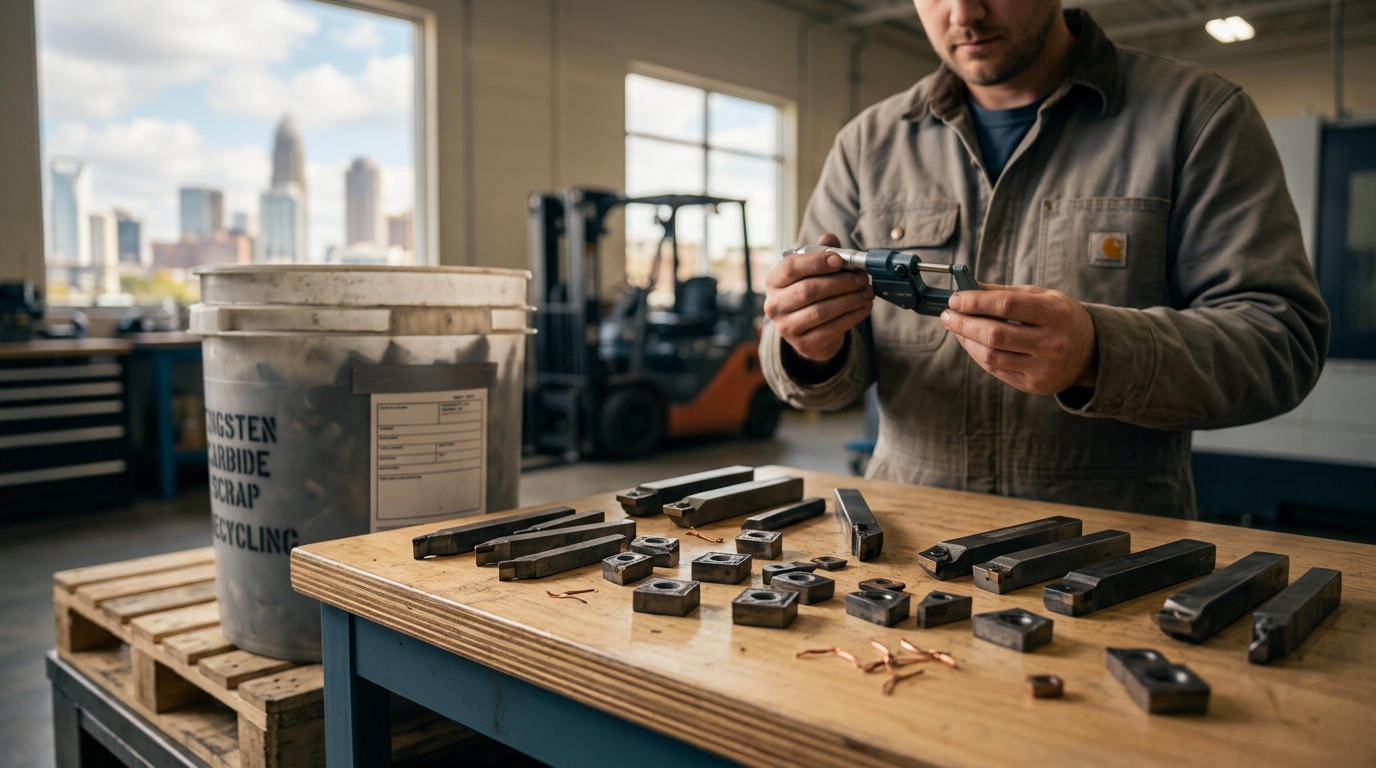
Industry data shows that global tungsten consumption exceeds 28,000 metric tons annually, creating a robust secondary market for industrial offcuts and worn tooling. Global tungsten demand continues to rise as manufacturing sectors prioritize supply chain resilience. Small workshops and independent fabricators frequently struggle to locate reliable buyers who offer transparent grading and prompt settlement. This guide evaluates the most accessible selling platforms, direct scrap programs, and regional recycling networks available to independent operators today. (Tungsten Carbide Recycling Services)
Direct Industrial Buyers and Scrap Programs
Specialized Scrap Dealers
Specialized scrap dealers is a network of certified recycling facilities that evaluate materials based on precise density and cobalt content. Specialized scrap dealers purchase tungsten carbide scrap directly from manufacturers and independent shops. These programs typically require minimal paperwork and provide immediate market-rate evaluations. Direct industrial buyers operate with streamlined logistics and standardized payment cycles. Small businesses benefit from predictable settlement windows and dedicated account support. The operational model eliminates middlemen and maximizes recovery value for worn inserts and broken drills.
Nationwide Collection Services
Nationwide collection services bridge the gap between remote workshops and major processing hubs. Nationwide collection services accept shipments ranging from fifty pounds to multi-ton industrial volumes. Operators receive customized shipping labels and dedicated account managers. This model ensures consistent pricing regardless of geographic location. Small enterprises gain access to enterprise-grade logistics without maintaining large inventory buffers. Transaction volumes typically exceed 15,000 metric tons annually, sustaining strong secondary market liquidity.
Online Marketplace Platforms
B2B Industrial Exchanges
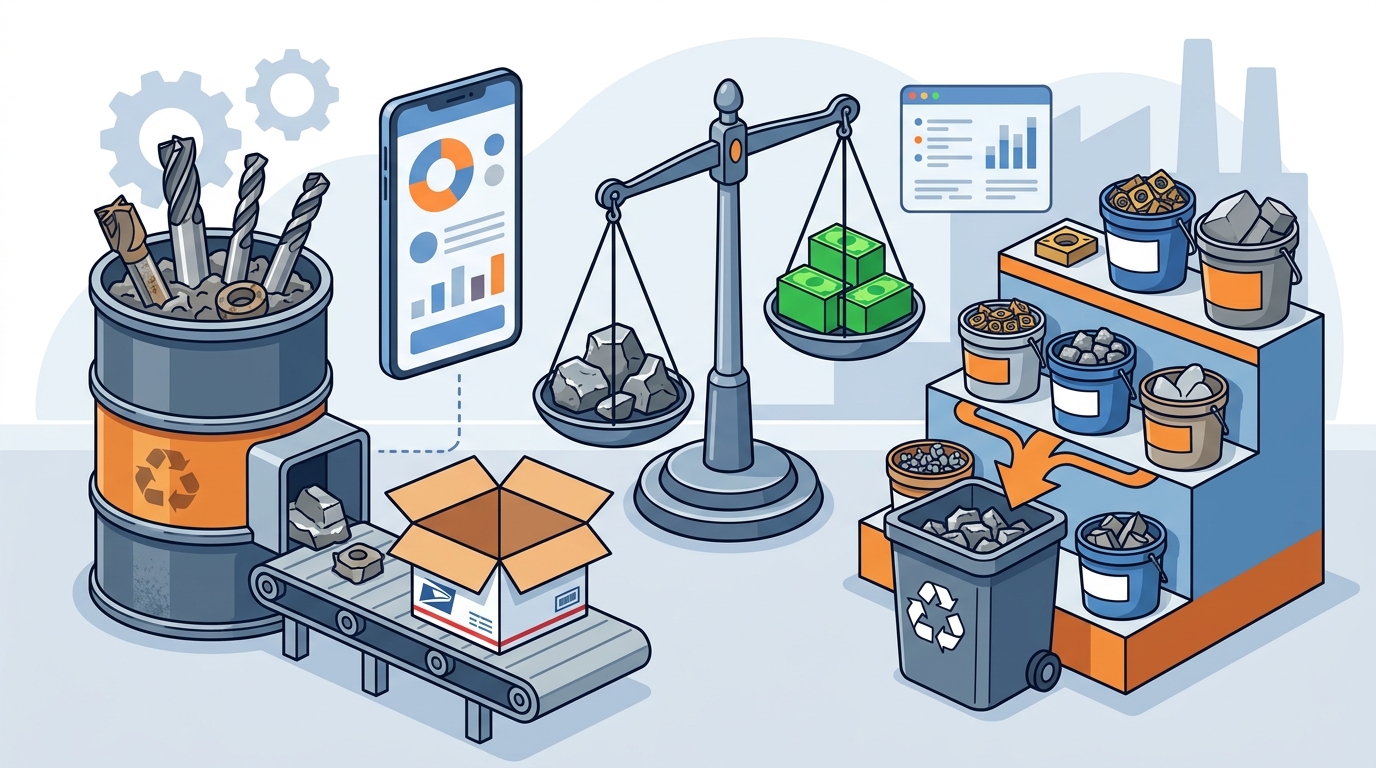
B2B industrial exchanges is a digital storefront system that connects independent sellers with verified procurement teams across multiple continents. B2B industrial exchanges connect sellers with verified procurement teams across multiple continents. These platforms require sellers to upload detailed material specifications and current inventory levels. Transaction fees typically range between three and five percent per completed sale. Independent fabricators must verify buyer credentials before shipping high-value carbide lots. The digital interface provides transaction history and automated compliance tracking.
General Auction Networks
General auction networks facilitate competitive bidding for mixed industrial scrap. General auction networks attract diverse buyers seeking bulk raw materials. Sellers list lots with clear photographs and weight estimates. Final prices fluctuate based on current market volatility and bidder competition. Small operations should reserve high-grade carbide for specialized buyers rather than general auctions. The platform structure favors volume transactions over premium pricing. Current market reports indicate average recovery rates between 85 and 92 percent for segregated inserts.
Regional Recycling Networks
Local Scrap Yards
Regional recycling networks is a localized processing infrastructure that accepts segregated carbide batches for immediate cash settlement. Local scrap yards operate as accessible drop-off locations for independent contractors. These facilities typically offer lower per-pound rates compared to specialized programs. Sellers must separate tungsten carbide from standard steel to avoid downgrading. The proximity reduces transportation costs and simplifies inventory management. Regional networks provide immediate cash settlement for qualifying materials. Industry data shows that local transactions process within 24 hours of material drop-off.
Compliance and Certification
Compliance and certification protocols ensure materials meet environmental and safety standards. Compliance and certification protocols mandate proper labeling and secure packaging for hazardous components. Buyers require material safety data sheets and chain-of-custody documentation. Small businesses must maintain accurate records to qualify for premium pricing tiers. Certified recycling programs reduce liability exposure and streamline audit processes. Regulatory frameworks require documented handling procedures for all industrial offcuts.
Platform Comparison and Selection
| Platform Type | Minimum Volume | Pricing Model | Settlement Speed |
|---|---|---|---|
| Specialized Scrap Dealers | Fifty pounds | Market-indexed rates | Forty-eight hours |
| Online Marketplaces | One hundred pounds | Commission-based fees | Seven to fourteen days |
| Regional Recycling Networks | Twenty-five pounds | Fixed yard rates | Same day |
| Nationwide Collection Services | Two hundred pounds | Volume-tiered pricing | Three to five business days |
Selecting the optimal platform requires matching inventory volume with settlement requirements. Specialized scrap dealers deliver the highest recovery rates for premium inserts and solid drills. Online marketplaces suit operators with consistent monthly output and flexible shipping windows. Regional networks remain ideal for immediate cash needs and low-volume transactions. Small businesses should maintain separate inventory streams to maximize overall recovery value. Current industry benchmarks confirm that segregated inventory yields 12 percent higher returns than mixed batches.
Key Takeaways
- Global tungsten consumption exceeds 28,000 metric tons annually, sustaining strong secondary market liquidity.
- Specialized scrap dealers offer market-indexed pricing with forty-eight hour settlement cycles.
- Online marketplaces charge three to five percent transaction fees and require verified buyer credentials.
- Regional recycling networks provide same-day cash settlement for twenty-five pound minimum batches.
- Nationwide collection services accept two hundred pound minimums with volume-tiered pricing structures.
- Compliance and certification protocols mandate material safety data sheets for all transactions.
- Separating high-grade carbide from mixed steel scrap prevents downgrading and preserves recovery value.
Frequently Asked Questions
What defines tungsten carbide scrap?
Tungsten carbide scrap is a composite material consisting of tungsten carbide particles bonded with a metallic binder, typically cobalt or nickel. This durable alloy is commonly used in cutting tools, drilling bits, and industrial wear parts. Small businesses can sell worn inserts, broken drills, and unused offcuts through specialized programs.
How do I verify a scrap buyer reputation?
Reputable buyers maintain transparent grading protocols and publish current market rates. Independent fabricators should request written pricing schedules and verify business registration details. Checking industry certifications and reading verified client testimonials confirms operational reliability.
What packaging standards apply to carbide shipments?
Carbide shipments require moisture-resistant containers and clear hazard labeling. Buyers mandate secure packaging to prevent material degradation during transit. Small operations should use heavy-duty plastic bins and seal all seams with industrial tape.
Can small businesses sell mixed carbide grades?
Mixed carbide grades are acceptable for general recycling programs. Specialized buyers prefer segregated inventory to maximize recovery percentages. Small enterprises should separate premium inserts from standard steel components before shipping.
How quickly do online platforms process payments?
Online platforms typically process payments within seven to fourteen business days. Sellers must complete identity verification and banking authorization before funds release. Direct industrial buyers often settle transactions within forty-eight hours of material receipt.
What documentation do I need to sell scrap?
Sellers must provide weight certificates, material specifications, and chain-of-custody records. Buyers require accurate lot descriptions to calculate precise market valuations. Small businesses should maintain digital copies of all transaction records for tax compliance.
Are there minimum weight requirements for sales?
Minimum weight requirements vary by platform type and buyer specialization. Regional networks accept twenty-five pound batches, while specialized programs require fifty pounds. Online marketplaces typically enforce one hundred pound minimums to justify shipping logistics.
Next Steps
Small businesses and independent fabricators can maximize recovery value by partnering with certified recycling programs. Carbide Kings Recycling Center offers nationwide collection services, transparent grading, and prompt settlement for all qualifying materials. Contact our team today to schedule a free evaluation and secure your current inventory at market rate. How to sell carbide scrap guides detail the exact packaging and documentation requirements for your first shipment.