
Tungsten carbide is one of the most valuable non-ferrous metals available to industrial scrap dealers and manufacturers today. According to recent market analyses, tungsten prices have shown significant volatility, with global demand driving values that often exceed traditional precious metals on a per-pound basis for high-grade carbide. Understanding the specific metrics that determine your scrap price is critical to ensuring you do not leave money on the table. This guide details the exact factors that influence tungsten carbide pricing and provides actionable strategies to secure the highest possible return on your scrap inventory.
Understanding Tungsten Carbide Value
Tungsten carbide is a composite material composed of tungsten carbide particles bound together with a binder, typically cobalt or nickel. This material is renowned for its extreme hardness and wear resistance, making it indispensable in cutting tools, mining equipment, and industrial machinery. Tungsten carbide is a composite material composed of tungsten carbide particles bound together with a binder. The value of your scrap is directly tied to the percentage of tungsten contained within the material.
Not all carbide is created equal. The tungsten content can range from 60% to over 80% depending on the application. For instance, cutting inserts used in CNC machining often have higher tungsten content than larger, bulkier mining bits. Buyers analyze the chemical composition to determine the exact grade. If you are unsure of the grade, a reputable buyer will perform testing to ensure fair pricing. Visit our Materials We Purchase page to see the specific grades we accept.
The global market for tungsten is influenced by supply chain dynamics, particularly from major producers in Asia. Fluctuations in these supply chains can cause rapid changes in spot prices. Staying informed about these trends helps you time your sales for maximum profitability. For more context on global metal markets, you can review reports from the USGS Mineral Commodity Summaries.
Grading Your Scrap for Accuracy
Accurate grading is the single most important factor in determining your payout. Buyers categorize scrap into distinct grades based on form, contamination, and tungsten content. Misgrading your scrap can lead to significant financial loss. Understanding these categories allows you to sort your inventory effectively before contacting a buyer.
1. New vs. Used Scrap
New scrap refers to unused carbide tools or offcuts from manufacturing processes. This material commands the highest price because it requires minimal processing to recover the tungsten. Used scrap includes worn-out cutting tools, drill bits, and inserts. While still valuable, used scrap may have lower tungsten percentages due to wear or different manufacturing specifications.
2. Contamination Levels
Contamination is a critical factor in grading. Scrap that is mixed with steel, aluminum, or other non-ferrous metals will be downgraded. Steel is particularly problematic because it dilutes the tungsten content and adds weight that you are not being paid for. Separating carbide from steel is essential for maximizing value. Use a magnet to identify steel components. If the magnet sticks, it is steel and must be removed.
3. Form and Size
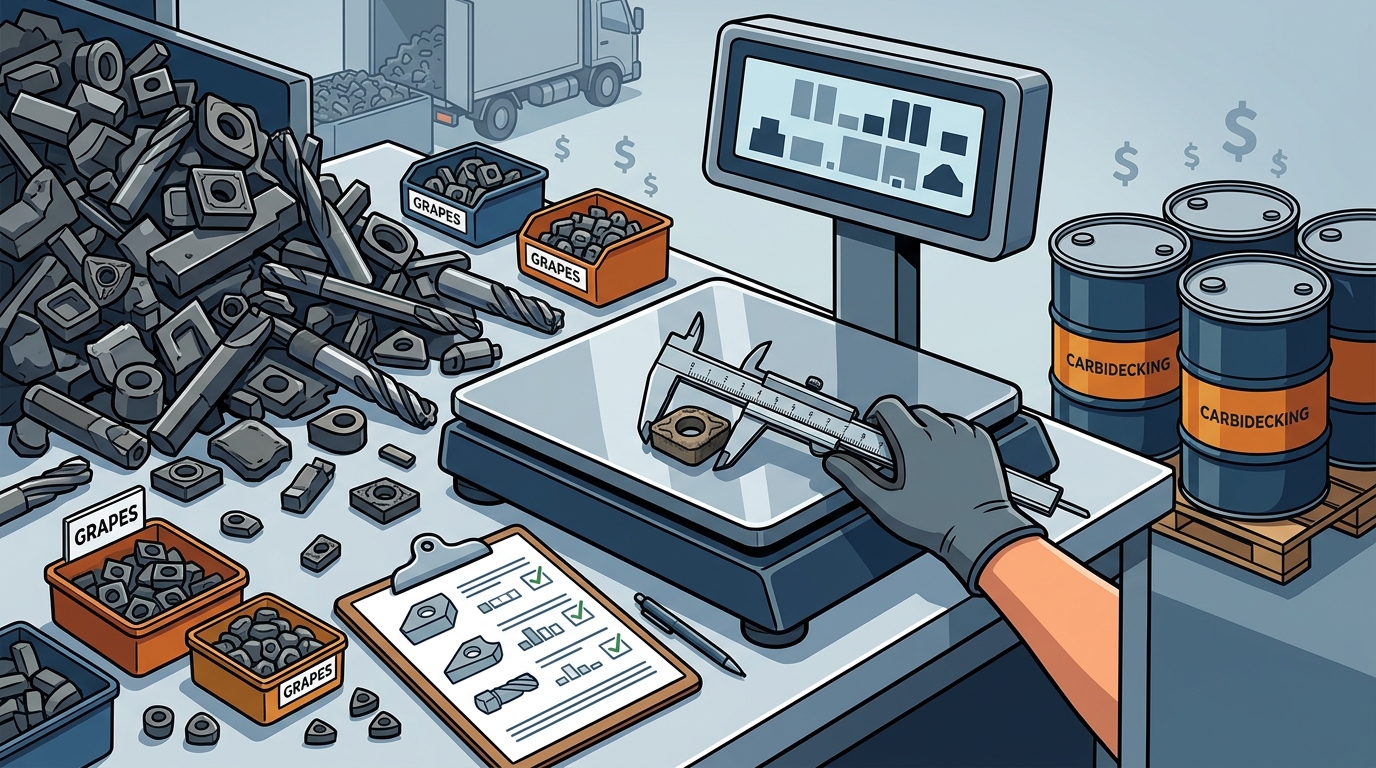
The physical form of the scrap also matters. Large, solid pieces are easier to process and often receive better rates than fine powders or small chips. However, even small inserts and bits are purchased at competitive rates if they are clean and properly sorted. Check our Carbide Scrap Program details to understand how we evaluate different forms.
Preparation Strategies for Higher Rates
Proper preparation of your scrap inventory can significantly increase the final offer you receive. Buyers prefer scrap that is clean, sorted, and ready for immediate processing. Taking the time to prepare your materials demonstrates professionalism and ensures a smoother transaction.
Clean and Sort
Remove all non-carbide materials. This includes steel shanks, aluminum holders, and any debris such as oil, grease, or dirt. Oil and grease can contaminate the recycling process and may result in penalties or lower offers. Store your scrap in clean, dry containers to prevent rust and further contamination. For detailed instructions on how to prepare your scrap, read our guide on How to Sell Carbide Scrap.
Document Your Inventory
Keep a detailed log of your scrap inventory. Record the type of tool, estimated tungsten content, and weight. This documentation helps you track the value of your scrap over time and provides leverage during negotiations. It also ensures that you do not lose track of any materials during the shipping process.
Understand the Pricing Formula
Carbide pricing is typically calculated based on the current spot price of tungsten trioxide, adjusted for the specific tungsten content of your scrap. The formula generally looks like this: Price = (Weight x Tungsten Percentage) x Spot Price Adjustment. Understanding this formula helps you verify the accuracy of any quote you receive. For real-time tungsten price tracking, you can monitor industry reports from Kinsun Tungsten Prices.
Market Dynamics and Pricing Models
The tungsten market is dynamic and influenced by various economic factors. Understanding these dynamics can help you time your sales for optimal returns. Prices can fluctuate daily based on global demand, supply constraints, and currency exchange rates.
Spot Prices vs. Long-Term Contracts
Most scrap sellers operate on a spot price basis, meaning they are paid the current market rate at the time of sale. This model offers flexibility and immediate payment. However, large volume sellers may negotiate long-term contracts to lock in prices. This strategy can provide stability but may limit upside potential if prices rise. For more information on our buying process, visit our Carbide Tungsten Buyers page.
Global Supply Chain Impact
China is the largest producer of tungsten, and any disruptions in their production or export policies can cause global price spikes. Additionally, demand from the aerospace and defense industries plays a significant role in keeping prices high. Monitoring these global trends can provide insights into future price movements. The World Bank Commodity Markets provides valuable data on global metal trends.
Seasonal Trends
While tungsten prices are less seasonal than some other commodities, there can be fluctuations based on industrial production cycles. End-of-quarter or end-of-year buying by major manufacturers can sometimes drive up demand. Being aware of these cycles can help you time your sales for better rates.
Choosing the Right Buyer
Selecting the right scrap buyer is crucial to maximizing your returns. Not all buyers offer the same rates, services, or reliability. A reputable buyer will provide transparent pricing, fast payments, and professional handling of your materials.
Transparency and Fairness
Look for buyers who provide clear, detailed quotes and explain their grading process. Avoid buyers who are vague about their pricing formulas or refuse to provide testing results. Transparency builds trust and ensures you are treated fairly. Carbide Kings is committed to transparent pricing and fair grading. Learn more about our About Us philosophy.
Payment Speed and Reliability
Fast payment is essential for cash flow management. Choose a buyer who offers prompt payment upon receipt and verification of your scrap. Delays in payment can impact your business operations. We pride ourselves on fast, reliable payments to our partners. See our FAQs for more details on our payment process.
National Reach and Logistics
If you are located far from major recycling centers, a buyer with a national reach and efficient logistics network is essential. They should offer secure shipping options and handle all logistics seamlessly. Carbide Kings serves clients across the United States, ensuring that location is never a barrier to getting top value. Find carbide buyers near you with our nationwide service.
Comparison of Buyer Options
| Feature | Carbide Kings | General Scrap Yard | Online Marketplace |
|---|---|---|---|
| Pricing Model | High tungsten spot price | Weight-based, lower rates | Variable, buyer-dependent |
| Grading Accuracy | Professional lab testing | Visual estimation | Depends on buyer |
| Payment Speed | Fast, reliable | Standard terms | Delayed, escrow |
| Logistics Support | Nationwide, secure | Drop-off only | Shipper responsibility |
Key Takeaways
- Grade Accurately: Separate carbide from steel and other contaminants to avoid downgrading.
- Clean Materials: Remove oil, grease, and debris to ensure a higher quality rating.
- Know Your Content: Understand the tungsten percentage in your scrap to verify quotes.
- Choose Specialists: Work with dedicated carbide buyers like Carbide Kings for superior rates.
- Monitor Markets: Track tungsten spot prices to time your sales effectively.
- Document Inventory: Keep detailed records of your scrap for accurate tracking and negotiation.
- Fast Payments: Prioritize buyers who offer prompt and reliable payment terms.
Frequently Asked Questions
How is tungsten carbide scrap priced?
Tungsten carbide scrap is priced based on the current spot price of tungsten trioxide, adjusted for the specific tungsten content of your material. The formula typically involves multiplying the weight by the tungsten percentage and then by the market rate. Buyers may also apply premiums for high-grade or clean scrap.
What is the difference between new and used carbide scrap?
New scrap refers to unused carbide tools or manufacturing offcuts, which generally have higher tungsten content and command higher prices. Used scrap includes worn-out tools and inserts, which may have lower tungsten percentages due to wear and different manufacturing specifications.
How can I tell if my scrap is contaminated?
Contamination is often visible as steel shanks, aluminum holders, or debris attached to the carbide. A simple magnet test can help identify steel components. If the magnet sticks, the material is steel and must be removed to avoid downgrading.
Do you buy small quantities of carbide scrap?
Yes, we purchase carbide scrap from businesses and individuals regardless of quantity. Whether you have a few pounds or several thousand pounds, we offer competitive pricing and nationwide service. Visit our Carbide Buyers Near Me page for more details.
How fast do you pay for scrap?
We offer fast, reliable payments upon receipt and verification of your scrap. Our streamlined process ensures that you receive your funds promptly, supporting your business cash flow needs. Check our FAQs for specific payment timelines.
What types of carbide do you purchase?
We purchase a wide range of carbide materials, including cutting inserts, drill bits, milling tools, mining bits, and other tungsten carbide scrap. For a complete list of accepted materials, see our Materials We Purchase page.
Can I get a free quote for my scrap?
Absolutely. We offer free, no-obligation quotes for your carbide scrap. Contact us with your inventory details, and we will provide a competitive offer based on current market rates. Get in touch via our Contact Us page.
Get Your Free Quote Today
Maximize the value of your tungsten carbide scrap by partnering with a trusted, industry-leading buyer. Carbide Kings offers the highest market prices, fast payments, and nationwide service. Do not settle for less when you can get the best value for your materials. Contact us today for a free quote and discover why we are America's top tungsten carbide buyer. Visit Carbide Kings to start your selling process.