

Tungsten carbide is not just a tool material; it is a high-value commodity that holds significant financial potential for manufacturing companies. According to recent market analyses, the global tungsten carbide market is projected to grow at a compound annual growth rate of over 5% through 2030, driven by industrial demand. This growth creates a lucrative opportunity for manufacturers to convert waste into revenue. By understanding the nuances of scrap valuation, sorting, and buyer selection, companies can significantly boost their bottom line. This guide details the exact strategies to maximize your returns. (About us Tungsten Buyers)
Understanding the Value of Tungsten Carbide
Tungsten carbide is a composite material made of tungsten carbide particles bonded with a metal binder, typically cobalt. Tungsten carbide is a hard, dense material used in cutting tools and industrial applications. Its value is derived from the scarcity of tungsten and the energy-intensive process required to extract and refine it. For manufacturers, discarding used inserts, drills, or end mills is akin to throwing away cash.
The primary driver of value is the tungsten content. High-quality carbide can contain up to 80% tungsten by weight. As industrial demand for hard metals increases, the price per pound fluctuates based on global supply chains. According to industry reports, tungsten prices have seen significant volatility in recent years, making timely sales crucial. Manufacturers who monitor these trends can time their scrap sales to coincide with peak market rates.
Another factor is the condition of the material. New, unused carbide commands the highest price because it requires no reprocessing. Used carbide, while still valuable, is priced based on its remaining tungsten content and the cost of refining it. Understanding this distinction helps manufacturers categorize their inventory correctly. Proper categorization ensures you are not underpaid for high-grade materials.
Critical Sorting Strategies for Higher Payouts
One of the most common mistakes manufacturers make is mixing different types of carbide. This practice, known as "downgrading," results in lower payouts because the buyer must assume the risk of lower-grade materials. To maximize revenue, you must implement a rigorous sorting protocol.
Separate New from Used
New carbide scrap, such as broken inserts from a fresh batch or unused drills, should be kept completely separate from used tools. New carbide is essentially raw material. It can be melted down and recast with minimal processing. Used carbide requires chemical leaching to extract the tungsten. The price difference between new and used can be substantial, often ranging from 20% to 40% per pound.
Identify High-Grade vs. Low-Grade
Not all used carbide is created equal. High-grade carbide includes large inserts, solid drills, and end mills with high tungsten content. Low-grade carbide includes small inserts, brazed tools, or materials with significant cobalt binder exposure. High-grade carbide yields more tungsten per pound. Separating these grades allows you to sell the high-grade material at a premium rate.
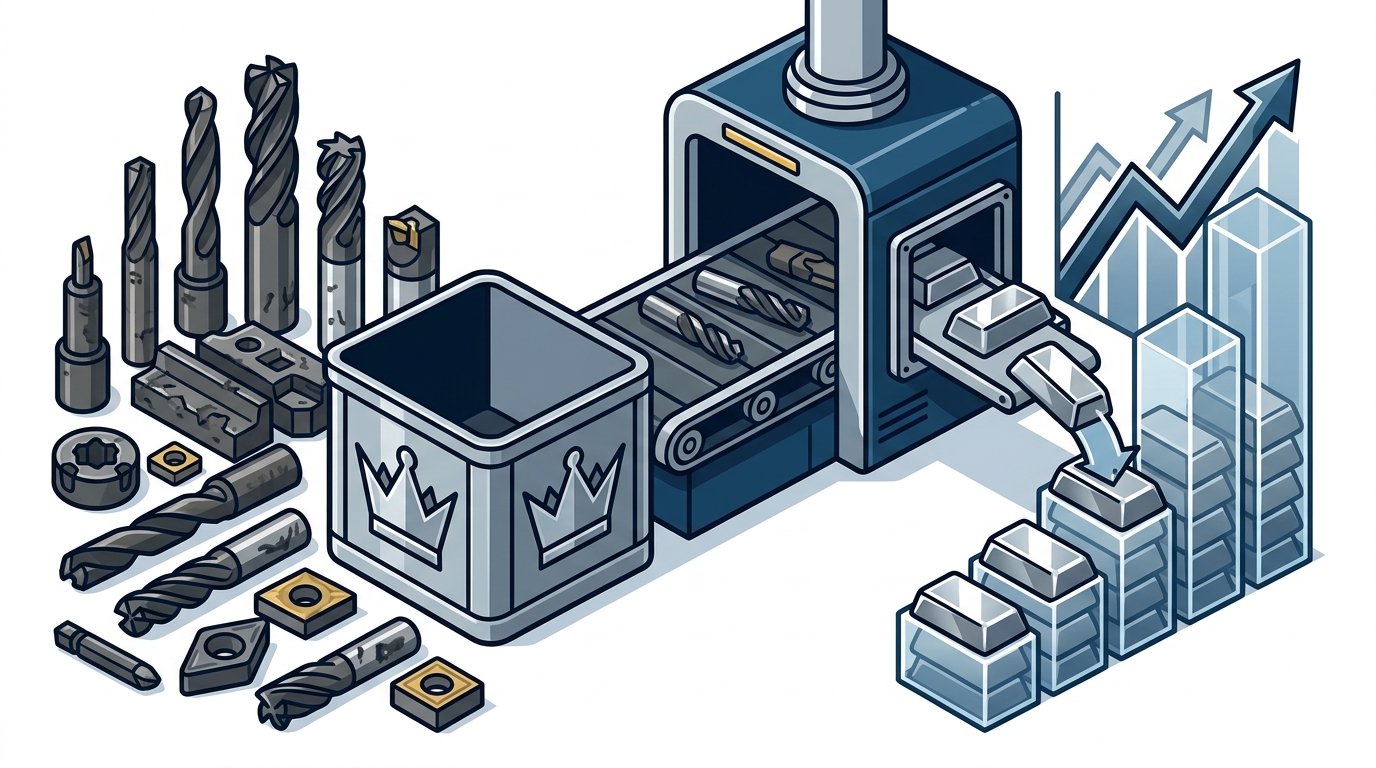
Remove Contaminants
Contaminants such as steel shanks, wood, or oil can significantly reduce the value of your scrap. Steel shanks attached to carbide inserts must be removed before sale. If left attached, the buyer will deduct the weight of the steel or lower the price to account for the extra refining cost. Clean, dry carbide scrap is always preferred. Moisture can lead to weight discrepancies and potential rejection by buyers.
How Pricing Mechanics Work
Understanding how buyers calculate prices is essential for negotiating better deals. Most reputable buyers use a formula based on the current market price of tungsten oxide, adjusted for the specific grade of your carbide.
The Base Price Formula
The base price is typically derived from the London Metal Exchange or other global commodity indices. Buyers apply a discount factor based on the purity of the carbide. For example, new carbide might be priced at 90% of the tungsten oxide value, while used carbide might be priced at 70-80%. This percentage varies by buyer and market conditions.
Volume Discounts and Tiers
Many buyers offer tiered pricing structures. Selling larger volumes often triggers higher per-pound rates. This incentivizes manufacturers to accumulate scrap over time rather than selling small batches frequently. However, holding onto scrap too long can expose you to market downturns. Finding the balance between volume discounts and market timing is key.
Payment Terms
Fast payment is a critical component of maximizing revenue. Delayed payments affect cash flow and can negate the benefits of a good price. Look for buyers who offer same-day or next-day payment upon weighing. Immediate payment ensures you capture the value at the time of sale. Some buyers may offer slightly lower prices for faster payment terms, so calculate the net benefit carefully.
Selecting the Right Buyer
Not all scrap buyers are equal. Choosing the right partner can mean the difference between a fair price and a significant loss. When evaluating potential buyers, consider their expertise, reputation, and logistical capabilities.
Specialization Matters
General scrap yards often lack the expertise to properly grade tungsten carbide. They may treat it as generic metal, resulting in lowball offers. Specialized buyers, such as Carbide Kings, focus exclusively on carbide and non-ferrous metals. This specialization allows them to offer more accurate grades and higher prices. They understand the nuances of different carbide types and can identify high-value items that generalists might miss.
Transparency and Trust
Transparency in the weighing and grading process is non-negotiable. Reputable buyers provide detailed breakdowns of how the price was calculated. They should be willing to explain the grade of each material and the current market rates they are using. Transparent pricing builds trust and ensures fair compensation. Avoid buyers who are vague about their methods or refuse to provide itemized quotes.
Nationwide Service
Logistics can eat into your profits. Buyers who offer nationwide pickup services reduce your shipping costs and simplify the process. This is particularly important for manufacturers with multiple locations or those who generate large volumes of scrap. Nationwide service ensures convenient and cost-effective collection. Check if the buyer covers your region and what their pickup schedules are.
Logistics and Shipping Considerations
Proper logistics are essential for maintaining the value of your scrap until it reaches the buyer. Poor handling can lead to contamination or loss, reducing your final payout.
Packaging Standards
Use sturdy, sealed containers to prevent spillage and contamination. Plastic bins or metal drums are ideal. Label each container with the type of carbide inside, such as "New Inserts" or "Used Drills." This helps the buyer process your shipment quickly and accurately. Clear labeling speeds up the grading process.
Documentation
Keep detailed records of your scrap inventory. Document the weight, type, and date of accumulation. This data can help you track trends and negotiate better prices over time. It also serves as proof of ownership in case of any disputes. Accurate records protect your financial interests.
Insurance and Security
Tungsten carbide is valuable, making it a target for theft. Ensure your storage areas are secure. If you are shipping large volumes, consider insuring the shipment. Verify that your buyer has secure logistics partners to handle the transport. Secure logistics protect your investment.
Key Takeaways
- Sort Rigorously: Separate new from used and high-grade from low-grade to maximize per-pound payouts.
- Monitor Markets: Track tungsten oxide prices to time your sales for peak value.
- Choose Specialists: Work with dedicated carbide buyers who offer accurate grading and higher prices.
- Ensure Transparency: Demand detailed breakdowns of weights and grades to avoid underpayment.
- Optimize Logistics: Use secure packaging and clear labeling to prevent contamination and delays.
- Track Data: Maintain inventory records to identify trends and improve future sales strategies.
- Compare Quotes: Always get multiple quotes to ensure you are receiving the best market rate.
Frequently Asked Questions
How is tungsten carbide scrap priced?
Tungsten carbide scrap is priced based on the current market value of tungsten oxide, adjusted for the purity and grade of the material. New carbide commands a higher price than used carbide due to lower refining costs.
Can I sell small amounts of carbide scrap?
Yes, many specialized buyers accept small quantities. However, larger volumes often qualify for better per-pound rates. It is worth accumulating scrap to reach volume thresholds if possible.
What is the difference between new and used carbide?
New carbide is unused material, such as broken inserts from a fresh batch. Used carbide has been employed in cutting applications. New carbide is valued higher because it requires minimal processing to recycle.
How do I prepare my carbide scrap for sale?
Remove any steel shanks or contaminants. Sort the material by grade and type. Store it in clean, dry, and sealed containers to prevent contamination during transport.
Why should I use a specialized buyer?
Specialized buyers have the expertise to accurately grade carbide, ensuring you receive fair value. General scrap yards may undervalue carbide by treating it as generic metal.
How quickly do buyers pay?
Reputable buyers often offer same-day or next-day payment upon receipt and weighing of the scrap. Fast payment improves cash flow and reduces financial risk.
Is tungsten carbide recyclable?
Yes, tungsten carbide is highly recyclable. The tungsten can be extracted and reused in new tools, reducing the need for virgin mining and lowering environmental impact.
What documents do I need to sell scrap?
Typically, you only need to provide a list of the materials and their estimated weights. The buyer will perform their own weighing and grading to determine the final price.
Get Your Free Quote Today
Maximizing revenue from tungsten carbide scrap requires strategic sorting, market awareness, and the right buyer partnership. By following these guidelines, you can turn your waste into significant profit. Contact Carbide Kings today for a free, no-obligation quote. We specialize in buying high-grade tungsten carbide scrap with fast payments and nationwide service. Do not leave money on the table. Sell your carbide scrap to the experts who know its true value.