
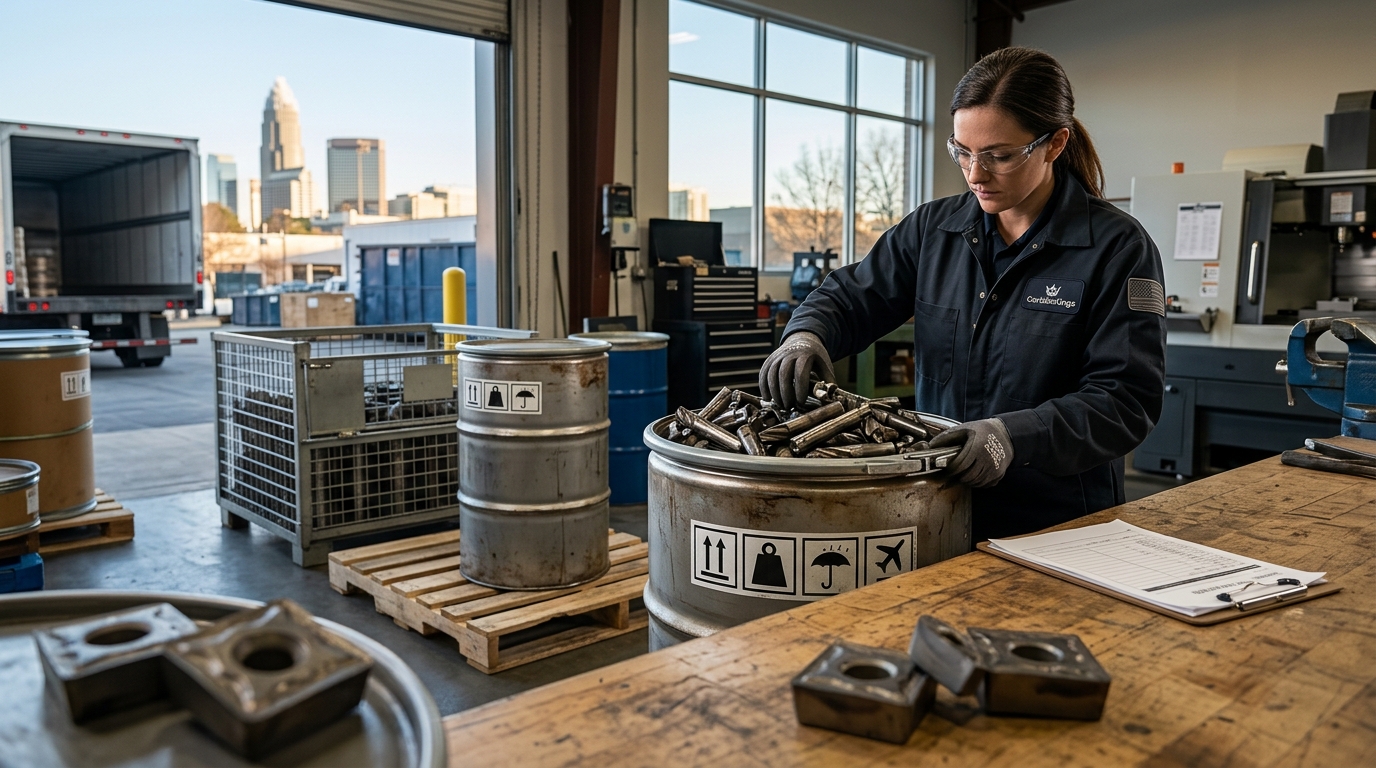
Tungsten carbide is one of the most valuable non-ferrous metals in the industrial recycling market, but its high density and potential for hazardous classification require strict handling protocols. According to the U.S. Department of Transportation, improper packaging of dense metal scrap can lead to significant logistical delays and safety violations during transit. This guide outlines the essential steps to ensure your tungsten carbide scrap reaches the recycling center securely, maximizing your payout while maintaining full regulatory compliance.
Understanding Material Classification
Before you pack a single piece of scrap, you must understand what you are shipping. Tungsten carbide is a composite material made of tungsten and carbon. Tungsten carbide is a hard metal alloy used in cutting tools and industrial wear parts. Because it contains tungsten, it is often classified as a high-value non-ferrous metal. However, certain forms, such as fine powders or sludges, may be classified as hazardous materials depending on their chemical composition and moisture content.
Carbide Kings specializes in buying both hard and soft scrap. Hard scrap includes drills, inserts, and wear parts. Soft scrap includes sludge, swarf, and powders. Soft scrap requires more rigorous containment to prevent environmental contamination. Knowing which category your material falls into determines the packaging requirements and the shipping method you must use.
For detailed information on the types of materials we accept, visit our Materials We Purchase page. Understanding these distinctions helps you prepare your inventory correctly before initiating the shipping process.
Preparation and Sorting
Proper preparation is the first line of defense against rejected shipments. Mixing tungsten carbide with other metals, such as steel or aluminum, can drastically reduce the value of your scrap. Recyclers must separate these materials to extract the pure tungsten content. Contaminated scrap leads to lower payouts and potential rejection of the entire shipment.
Separating Hard and Soft Scrap
Keep hard scrap and soft scrap separate. Hard scrap, such as carbide inserts and end mills, can be handled more easily. Soft scrap, like carbide sludge or swarf, requires sealed containers to prevent dust dispersion. If you have mixed materials, sort them into distinct bins. This separation allows the recycling center to process each type efficiently.
Cleaning and Drying
Remove excess oil, coolant, and debris from hard scrap pieces. While some oil is acceptable, excessive contamination can complicate the recycling process. For soft scrap, ensure that powders are dry if possible. Moisture can add weight without adding value and may trigger hazardous material regulations. Dry materials are easier to process and yield higher purity rates.
Learn more about our procurement process and how we handle different material types by visiting our Carbide Scrap Program page.
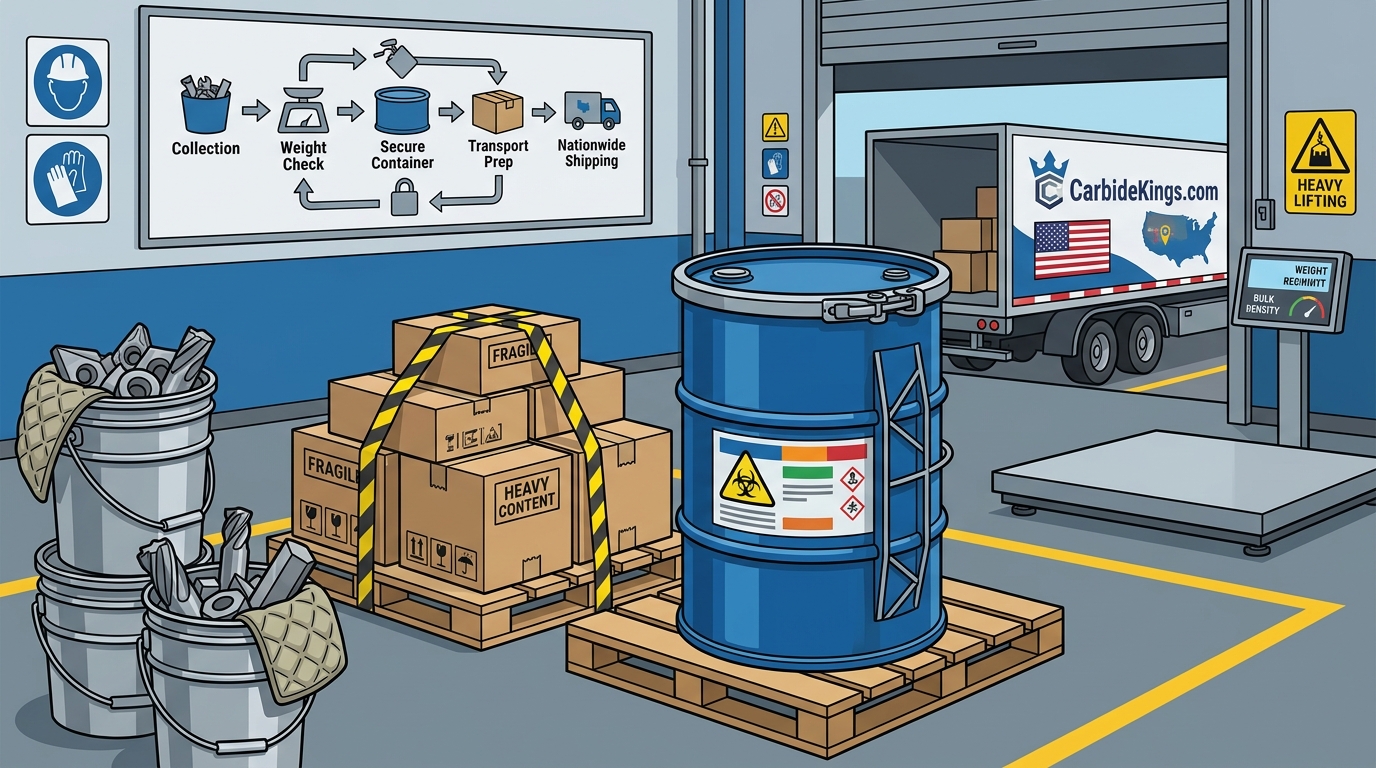
Packaging Standards
Packaging is critical for both safety and value preservation. The goal is to prevent loss, contamination, and damage during transit. Proper packaging ensures that every gram of tungsten carbide reaches the recycler intact.
Hard Scrap Packaging
For hard scrap, use heavy-duty cardboard boxes or wooden crates. If the pieces are sharp, wrap them in bubble wrap or place them in plastic bags before boxing. Seal the boxes with strong packing tape. For large quantities, palletize the boxes and shrink-wrap them securely. This prevents the boxes from shifting and tearing during transport.
Soft Scrap Packaging
Soft scrap requires airtight containment. Use sealed plastic drums or heavy-duty polyethylene bags. Ensure that the bags are double-bagged if they are prone to tearing. For sludge, use sealed drums that are clearly labeled. Leaking containers can result in hazardous material fines and shipment rejection.
Weight Considerations
Tungsten carbide is extremely dense. A small volume of material can weigh significantly more than it appears. Ensure that your packaging can support the weight. Overloaded boxes can burst, leading to loss of material and potential injury to handlers. Verify the weight capacity of your containers before sealing.
For more details on our pricing and how we evaluate scrap quality, check out our sell carbide pricing information.
Documentation and Labeling
Accurate documentation is essential for smooth customs clearance and internal processing at the recycling center. Mislabeling can cause delays and additional fees.
Manifest and Inventory Lists
Include a detailed inventory list inside the shipment. List the type of material, estimated weight, and quantity of pieces. This helps the recycling center verify the contents upon arrival. Accurate manifests speed up the payment process significantly.
External Labeling
Label all packages clearly with the sender and recipient information. If the material is classified as hazardous, ensure that the appropriate hazard labels are visible on the exterior. For non-hazardous tungsten carbide, label the packages as "Non-Ferrous Metal Scrap" to guide handlers. Clear labeling reduces handling errors and improves safety.
Review our How to Sell Carbide Scrap guide for step-by-step instructions on preparing your documentation.
Shipping Logistics
Choosing the right shipping method depends on the volume and urgency of your shipment. Carbide Kings offers convenient services including on-site pickups and comprehensive shipping solutions.
Carrier Selection
Use reputable carriers such as FedEx, UPS, or specialized freight companies for large shipments. Ensure that the carrier is experienced in handling industrial metals. Experienced carriers understand the weight and handling requirements of dense metals.
Insurance and Tracking
Always insure your shipment, especially for high-value tungsten carbide. Use tracking services to monitor the progress of your package. Tracking provides peace of mind and proof of delivery. Contact us for a free quote to discuss shipping options tailored to your needs.
Visit our About Us Tungsten Buyers page to learn more about our commitment to secure and efficient logistics.
Key Takeaways
- Separate Materials: Keep hard and soft scrap separate to maximize value and simplify processing.
- Secure Packaging: Use heavy-duty containers for hard scrap and airtight drums for soft scrap to prevent leakage.
- Accurate Documentation: Include detailed manifests to speed up payment and ensure compliance.
- Weight Awareness: Tungsten carbide is dense; ensure packaging can support the weight to prevent bursting.
- Clear Labeling: Label packages clearly as non-ferrous scrap or hazardous material as appropriate.
- Insurance: Insure high-value shipments to protect against loss or damage during transit.
- Professional Support: Partner with experienced buyers like Carbide Kings for reliable logistics and fair pricing.
Frequently Asked Questions
How do I package soft tungsten carbide scrap?
Soft scrap, such as sludge and powders, should be sealed in airtight plastic drums or heavy-duty polyethylene bags. Double-bagging is recommended to prevent tearing and dust dispersion. Proper containment prevents environmental contamination and regulatory issues.
Can I ship tungsten carbide scrap internationally?
Yes, international shipping is possible but requires strict adherence to hazardous materials regulations. International shipments often involve complex customs documentation. Contact us for specific guidance on cross-border logistics.
What happens if my scrap is contaminated?
Contaminated scrap may be rejected or subject to lower payouts. Contamination reduces the purity and value of the recycled material. Ensure that your scrap is clean and free from excessive oil or other metals.
Do you offer pickup services?
Yes, Carbide Kings offers on-site pickup services for large quantities. On-site pickup simplifies the logistics for high-volume sellers. Contact us to schedule a pickup in your area.
How is tungsten carbide valued during shipping?
Value is determined by the purity and weight of the tungsten content. Purity is assessed through laboratory analysis upon arrival. Accurate manifests help in providing preliminary quotes.
Is tungsten carbide considered hazardous?
Hard tungsten carbide is generally not hazardous. However, soft scrap like powders may be classified as hazardous depending on the composition. Classification depends on the specific chemical properties of the material. Always consult with your recycler for classification guidance.
How long does shipping take?
Shipping times vary by carrier and location. Domestic shipments typically arrive within 3 to 5 business days. International shipments may take longer due to customs processing.
Contact Us
Ready to sell your tungsten carbide scrap? Carbide Kings is ready to help you maximize the value of your materials. Contact us today for a free quote and learn more about our nationwide shipping solutions. Visit our Carbide Buyers Near Me page to find out how we can serve your business.